


Hiring mistakes keep Australian employers awake far more than missing skills do. A skills gap can be trained, scheduled and managed. A hiring mistake lands on the whole team: lost time, tense meetings, a second recruitment round and a manager who now has to explain the decision. That is why so many capable candidates lose out to someone who simply looks safer on paper.
This guide explains why employers fear hiring mistakes, which warning signs make them nervous, and how you can show you are a low-risk, high-value hire. It is written for graduates, migrants, career changers and IT beginners looking for work in Sydney, Melbourne, Brisbane, Perth, Adelaide and Canberra.
Why Hiring Mistakes Hurt Employers More Than Skill Gaps
When a candidate has a skill gap, the employer can see it, price it and plan around it. When a new hire turns out to be unreliable, hard to work with or a poor fit, the damage is harder to measure and much harder to reverse. Hiring mistakes are expensive precisely because they are uncertain.
There is also a personal element. The manager who made the hiring decision is accountable for it. A skills gap is usually seen as normal learning. A visible hiring mistake feels like a judgement error. So employers instinctively protect themselves by choosing the candidate who feels least likely to go wrong.
The Real Cost of Hiring Mistakes
Employers rarely look at a bad hire as a single event. They see a chain of costs that keeps growing:
- Recruitment and onboarding time spent on someone who does not stay.
- Lost productivity while the team waits for the new hire to catch up.
- Extra pressure on colleagues who cover gaps and fix mistakes.
- Management time spent coaching, documenting and eventually exiting.
- Damage to team morale and, in client-facing roles, to customer trust.
- A second search to refill the same role.
Because those costs stack up quietly, many employers would rather hire a slightly less skilled candidate they trust than a highly skilled one they cannot read. Understanding this changes how you apply.
Skill Gap vs Hiring Mistake: How Employers Think
| Factor | Skill gap | Hiring mistake |
| Can it be fixed? | Yes, through training and mentoring | Often not, once trust or fit is lost |
| How visible is it? | Obvious in interviews and tests | Often hidden until weeks after the start date |
| Who feels it? | Mostly the new hire | The manager, the team and sometimes clients |
| Typical response | Provide training | Performance management, exit and rehire |
| Employer attitude | “They can learn this” | “We cannot afford to get this wrong” |
Seven Warning Signs That Make Employers Fear Hiring Mistakes
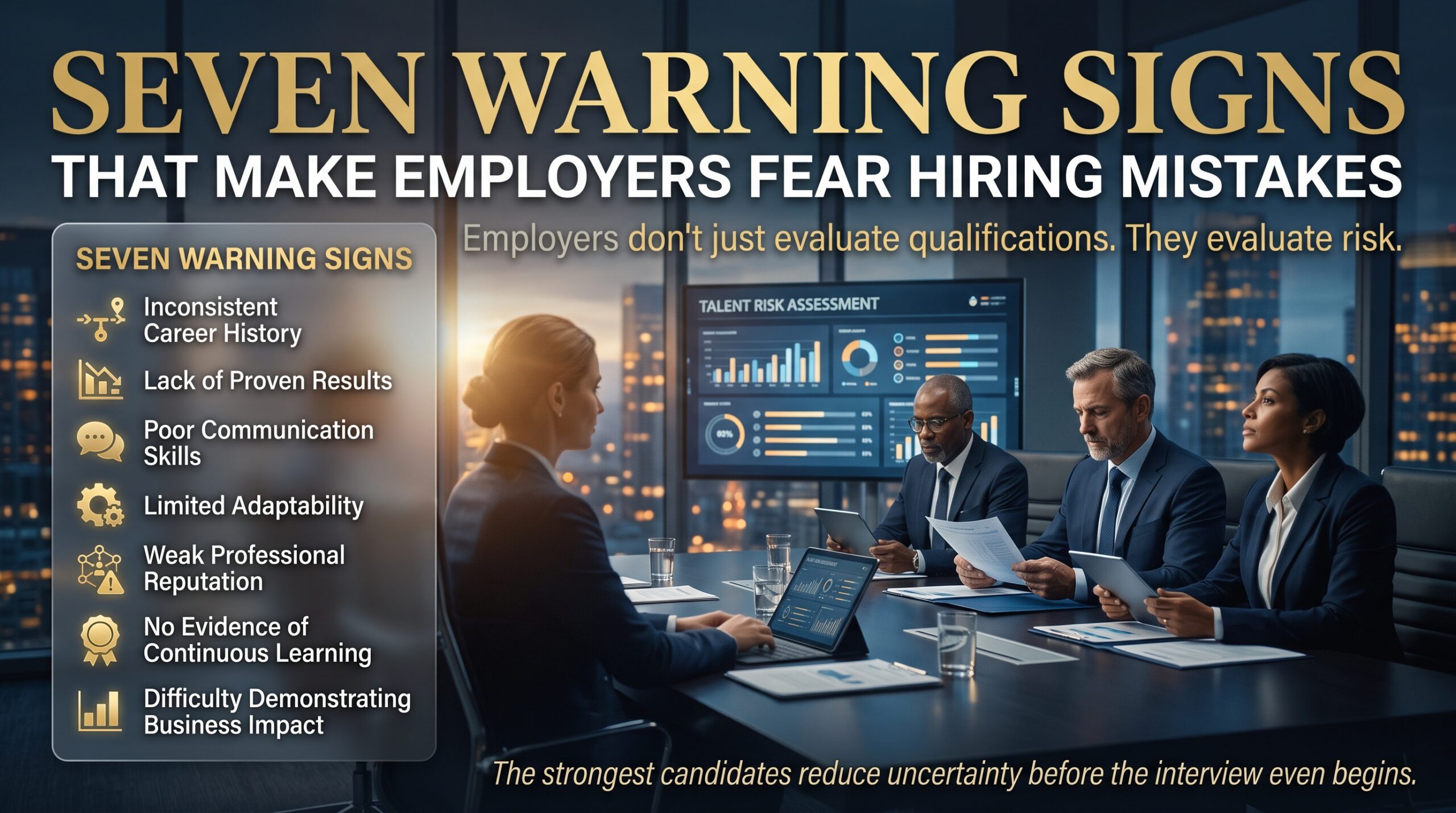
1. A resume that claims more than it proves
Long skill lists with no projects, tools or results look inflated. Employers cannot verify them, so they treat them cautiously.
2. Unexplained gaps or frequent short roles
This is not an automatic rejection, but silence makes people guess. A brief, honest explanation protects you from the worst assumptions.
3. Vague answers to behavioural questions
“I am a team player” tells an interviewer nothing. A specific story with a challenge, an action and a result shows how you actually behave.
4. Poor communication before the interview
Slow replies, careless emails and missed details become early evidence of how you might work later.
5. No sign of recent learning
In technology especially, employers worry about people whose skills have not been refreshed. Recent training or certification reassures them.
6. Unclear reasons for applying
If you cannot explain why this role and this company, you may look like a candidate who will leave at the first better offer.
7. Nothing a stranger can check
No portfolio, referee or credential means the hiring manager has to trust you on faith, and faith is not a risk-management strategy.
How to Show You Are Not One of the Hiring Mistakes
You cannot control the employer’s fear, but you can answer it before it is spoken. These steps work across industries and cities.
Step 1: Make your claims verifiable
Link a portfolio, list a certification, name a project and include two referees who will respond quickly. Verifiable proof turns “I can do this” into “here is evidence”.
Step 2: Close the experience gap with structured practice
Hands-on projects and supervised work experience show you can apply skills in a realistic setting. The Job Ready Program combines instructor-led training, recognised certifications, career counselling and a remote internship with Logitrain, so you can add practical examples to your resume without leaving your current job.
Step 3: Tell one consistent story
Choose a direction, such as cyber security, data analysis, business analysis, cloud computing, software testing or web development, and let your resume, cover letter and interview answers all point the same way.
Step 4: Use your cover letter to remove doubt
A tailored cover letter is your best chance to explain a gap, show genuine interest and demonstrate that you have researched the company. It signals commitment before you are even hired.
Step 5: Prepare stories, not slogans
Practise four or five short stories that cover teamwork, problem solving, pressure and learning from a mistake. Specific stories feel safe because they sound real.
Step 6: Behave like a colleague from the first email
Reply quickly, arrive early, ask thoughtful questions and send a short thank-you message. Employers read these small signals as a preview of how you will work.
Which Pathway Fits Your Goal?
| Pathway | Fear it reduces | Evidence you can show |
| Cyber Security Job Ready Program | Skills and credibility concerns | Lab work and security certifications |
| Data Analysis Job Ready Program | Skills and ramp-up concerns | Dashboards and a clear portfolio |
| Business Analysis Job Ready Program | Communication concerns | Requirements documents and process maps |
| Project Management Job Ready Program | Reliability concerns | Project plans, risk registers and certification |
| Software Testing Job Ready Program | Ramp-up concerns | Test plans and defect reports |
| IT Job Ready Program | Retention and fit concerns | Foundation skills, career counselling and a clear pathway |
Individual courses start from $899 and complete job ready programs start from $4,599, so you can begin with one course and upgrade later. To compare certification pathways and local work experience support, see the Logitrain Job Ready Programs.
Hiring Mistakes and the Job Market in Australian Cities
- Sydney: High application volumes mean recruiters filter quickly. Clear proof helps you pass the first scan. See the Sydney Job Ready Program.
- Melbourne: A broad market across health, government and technology rewards candidates with practical, role-specific evidence. See the Melbourne Job Ready Program.
- Brisbane: Growth in infrastructure and public projects increases demand for dependable, communicative hires. See the Brisbane Job Ready Program.
- Perth: Resources and engineering employers value reliability and fast ramp-up. See the Perth Job Ready Program.
- Adelaide: Defence, health and technology employers appreciate structured, verifiable training. See the Adelaide Job Ready Program.
- Canberra: Government agencies and contractors lean on formal credentials and documented experience. See the Canberra Job Ready Program.
Live online and in-house training are also available, so you can build your evidence from anywhere in Australia. Browse all job ready program locations.
A 30-Day Plan to Avoid Looking Like a Hiring Mistake
| Week | Focus | Evidence you create |
| Week 1 | Audit your resume for unproven claims and write a short gap explanation | Revised resume and one-paragraph explanation |
| Week 2 | Start structured training or a hands-on project | First project or lab output |
| Week 3 | Build a simple portfolio and confirm two referees | Portfolio link and referee details |
| Week 4 | Prepare interview stories and send targeted applications | Five stories and tailored cover letters |
For trustworthy background on employment rights and recruitment practices, the Fair Work Ombudsman is a reliable starting point, and the SEEK career advice hub offers practical guidance on applications and interviews.
Hiring Mistakes FAQs
Why do employers fear hiring mistakes?
Because the costs are high and the effects spread across the team. A bad hire wastes time, lowers morale and forces another recruitment round, while a skill gap can usually be trained.
Do employers really prefer a safer candidate over a more skilled one?
Often, yes. If two candidates are close, the one who feels more reliable, communicates clearly and offers verifiable proof usually wins.
How can I avoid being seen as a hiring mistake with no local experience?
Build local, verifiable evidence: structured training, hands-on projects, a remote internship and referees who can confirm your work. A job ready program is designed to help with exactly this.
Are career gaps a deal breaker?
Not usually. An honest, brief explanation and signs of recent learning reassure most employers.
Can I study and apply for jobs at the same time?
Yes. Flexible full-time, part-time and weekend options are available. Speak to the team through the contact page or call 1300 649 299 to find a schedule that fits.
Final Thoughts: Be the Hire Nobody Has to Worry About
Employers do not expect perfection, but they do want confidence. Once you understand why hiring mistakes feel so costly, you can stop focusing only on your skill list and start removing doubts: prove your claims, explain your story, communicate clearly and show recent, practical learning.
Ready to build that confidence? Explore the full range of Job Ready Programs, find your nearest location or contact our team to choose the right pathway.