
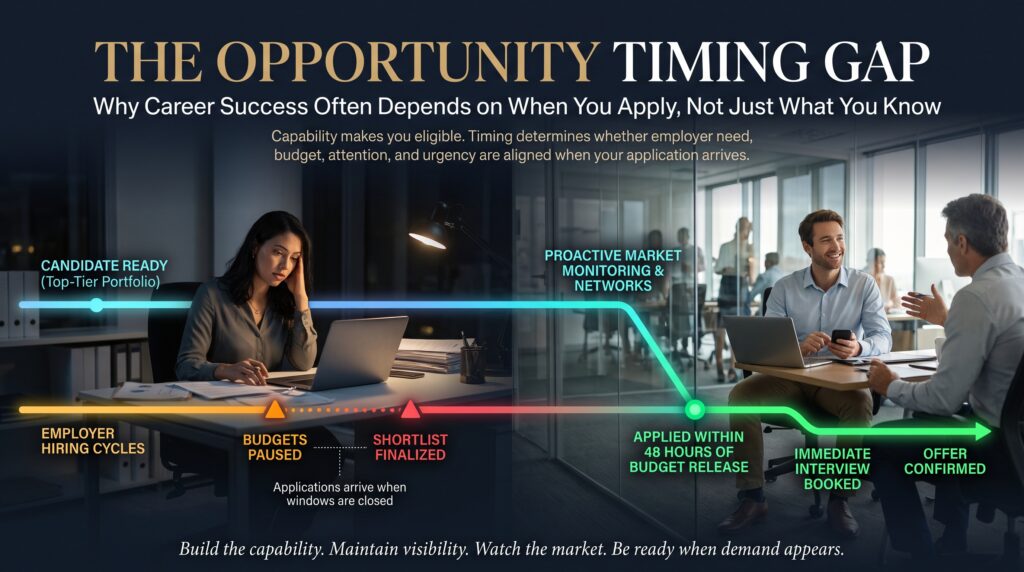

The opportunity timing gap is the difference between being qualified for a role and being ready at the moment the role is actually available. Two people with the same skills can have very different outcomes because one applied in the first few days of a posting, after finishing a certification and refreshing a resume, while the other found the same role three weeks later, when interviews were already booked.
This guide explains the opportunity timing gap, why timing matters as much as knowledge in many careers, and how job seekers, graduates, migrants and career changers can plan their move so they are ready when the right opportunity appears.
What Is the Opportunity Timing Gap?
Most career advice focuses on what you know: skills, certifications and experience. These matter a great deal. But hiring does not happen in an even stream. Roles open when budgets are approved, teams grow, projects start or someone resigns, and they close when enough suitable candidates have been found. The opportunity timing gap is what appears when your readiness and the employer’s hiring window do not line up.
It is not about luck alone. A candidate who understands how and when recruitment works can prepare in advance, act quickly and meet the opening instead of chasing it.
Why the Opportunity Timing Gap Exists
Several practical forces make timing important:
- Hiring comes in waves. Many organisations hire after budgets are set, at the start of a new financial or calendar year, or when a project is approved. Patterns vary by industry and employer.
- Early applicants are seen first. Hiring teams often review applications as they arrive and may shortlist before a posting closes.
- Screening is partly automated. Many employers use an applicant tracking system to sort applications, so a resume that is not tailored to the role may be filtered out.
- Some roles are filled through networks. Referrals and conversations can happen before a position is advertised, a space often called the hidden job market.
- Programs have fixed windows. Graduate, internship and training pathways often open and close months before they start.
- Skills need to be fresh. A certification gained six months too late, or a portfolio that is not ready, can mean missing a good opening.
- Preparation takes time. A strong resume, cover letter and interview skills cannot be built overnight when a perfect job appears.
Signs of an Opportunity Timing Gap in Your Own Job Search

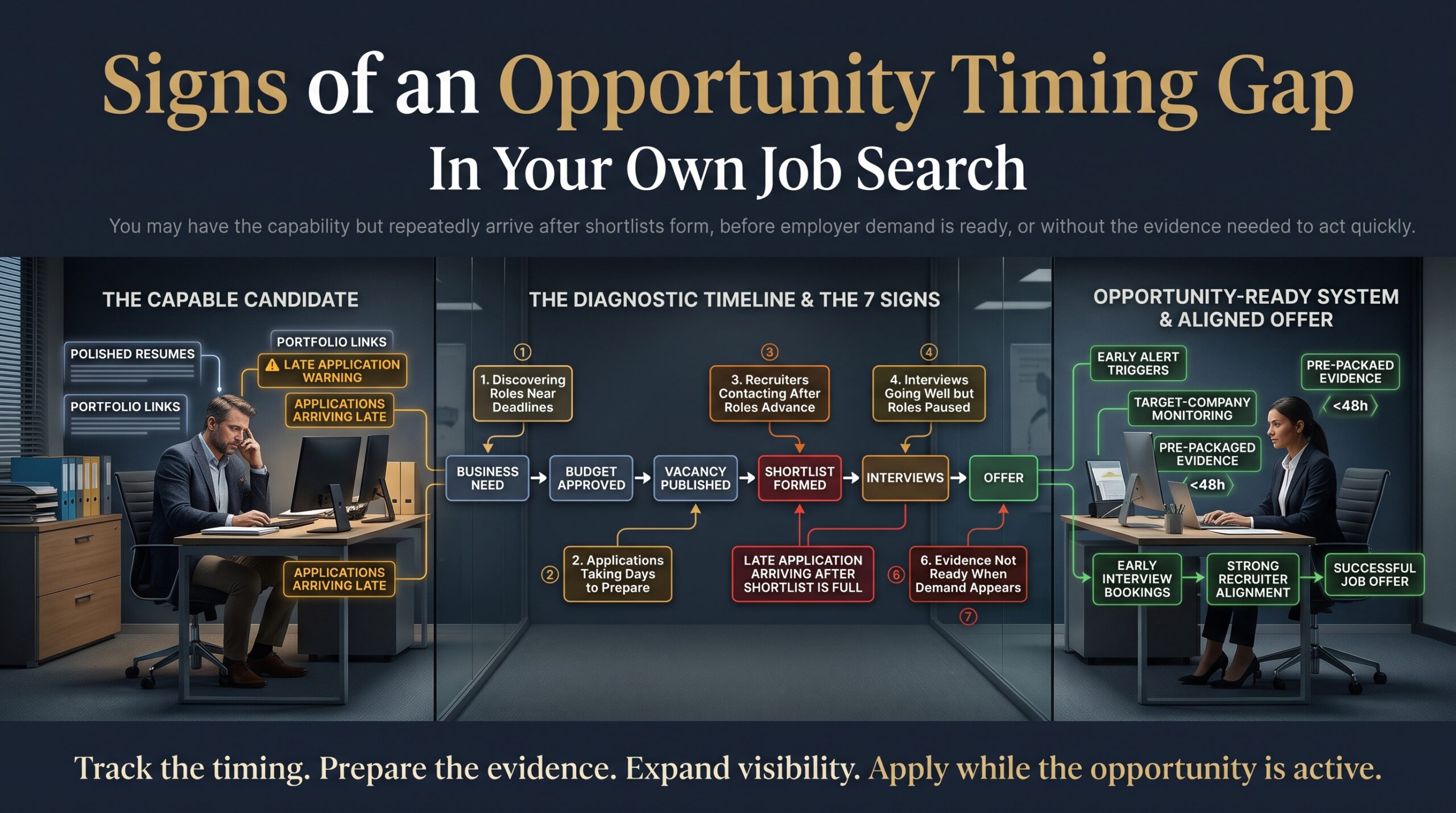
- You often find roles you are qualified for only after they have been open for weeks.
- You wait until you feel completely ready before you apply, and the role is gone.
- Your certification finishes, but your resume and profile are not updated for another month.
- You send applications in bursts, then stop, so you miss postings in between.
- Colleagues hear about roles through contacts before they appear publicly.
- You get interviews but not offers because other candidates were further along in the process.
The Real Cost of the Opportunity Timing Gap
- Longer job searches. Missing hiring windows means waiting for the next one.
- Lost momentum. Skills and confidence fade when the next step is delayed.
- Settling for less. Missing the first choice can lead to accepting a role that does not fit.
- Unnecessary self-doubt. Candidates often assume they lack skills when the real issue was timing.
- Wasted training. A new qualification has less impact when it is not paired with a plan for using it.
In short, the opportunity timing gap can make a strong candidate look unsuccessful, even though their skills were never the problem.
How to Close the Opportunity Timing Gap
You cannot control when employers hire, but you can control how prepared and visible you are. Use these steps.
- Work backwards from your target. Decide when you want to start a new role and plan your learning, certification and applications around that date.
- Get your materials ready early. Prepare a resume, cover letter template, LinkedIn profile and a short portfolio before you start applying.
- Set up job alerts. Create alerts for your target roles and cities so you see new postings quickly.
- Follow target employers. Check their careers pages and social updates, so you notice openings and hiring signals.
- Apply early, but tailor each application. Speed helps, but a rushed generic resume is easily filtered. Match your language to the role.
- Do not wait for perfect. If you meet most of the requirements, apply. Many hiring managers expect candidates to grow into a role.
- Build your network. Business networking through meetups, alumni groups and informational chats can bring you to openings before they are public.
- Time your certification. Aim to finish it before you start the main search, so you can list it on your resume rather than as in progress.
- Prepare for interviews in advance. Practise common questions and have examples ready, so you are not starting from zero when an invitation arrives.
- Track the market. Use public labour market information, such as that from Jobs and Skills Australia and Workforce Australia, to see which skills and sectors are in demand.
- Keep a steady rhythm. Apply and network a little every week instead of in occasional bursts.
A Simple Career Timing Planner
A planner like this turns the opportunity timing gap into a clear schedule. Adjust the timeframes to your own situation:
| Stage | Timing | What to do |
| Plan | 3 to 6 months before your target start | Choose your target roles, check skill gaps and plan your training |
| Build | 2 to 4 months before | Complete your course or certification and build a small portfolio |
| Prepare | 1 to 2 months before | Update your resume, cover letter and profile; practise interviews |
| Apply | When roles open | Respond within days with tailored applications |
| Follow up | 1 to 2 weeks after applying | Send a polite follow-up and keep networking |
Even a rough version of this plan puts you ahead of someone who starts preparing only after a role appears.
Mistakes That Widen the Opportunity Timing Gap
- Waiting until you finish every course before building a resume or profile.
- Sending the same resume to every role without tailoring it.
- Relying only on job boards and ignoring networking.
- Applying in sudden bursts followed by long silences.
- Assuming one rejection means a lack of skill instead of checking timing and fit.
Programs That Support Your Career Timing
Training works best when it includes career preparation, so your skills and your timing arrive together. Our job ready programs combine IT training with career counselling, resume and cover letter support and interview preparation. Explore the pathways:
- Business Analysis for career changers, graduates and migrants moving into analysis roles.
- Cloud Computing and Cyber Security for in-demand technology pathways.
- Data Analysis and Database for roles built around information and reporting.
- Project Management and Software Testing for delivery and quality roles.
- Web Development and IT Job Ready for broader entry into the IT sector.
See every pathway on our job ready programs page, read the FAQs, learn about us or browse more tips on the career blog. Outcomes depend on your effort, experience and the job market, so treat any program as a way to prepare, not a guarantee.
Job Ready Programs in Your City
Whether you are closing the opportunity timing gap after graduating, changing careers or settling in Australia, training and career support are available in person and live online:
- Job ready program in Melbourne
- Job ready program in Sydney
- Job ready program in Brisbane
- Job ready program in Adelaide
- Job ready program in Perth
- Job ready program in Canberra
See all locations or contact our team to plan the right pathway for your goals and timeline.
Frequently Asked Questions About the Opportunity Timing Gap
What is the opportunity timing gap?
It is the gap between being qualified for a role and being ready, visible and applying at the time the role is actually open.
Does the time you apply really affect your chances?
Often, yes. Employers may review applications as they arrive, and some roles close or fill quickly. Applying early with a tailored application can improve your chances, though results vary by employer.
When is the best time to look for an IT job in Australia?
There is no single best time. Many employers hire after budgets are set or at the start of a new year, but opportunities appear all year. A steady routine of alerts, networking and applications works better than waiting for one perfect month.
Should I finish my certification before applying?
Ideally, complete it before your main search so you can list it clearly. If you are close to finishing, you can still apply and note your expected completion date.
How can a job ready program help with timing?
A program that combines training with resume support, career counselling and interview preparation helps you build skills and job-search materials together, so you are ready sooner. It cannot guarantee a job.
Final Thoughts
The opportunity timing gap is a reminder that career success is not only about knowing more. It is also about being prepared, visible and ready to act when an opening appears. Plan backwards from your goal, prepare your materials early, build relationships and keep a steady rhythm, and you give your skills the best chance to meet the right opportunity.
Ready to plan your next move? Explore our job ready programs and speak to our team about a pathway that fits your timeline.