
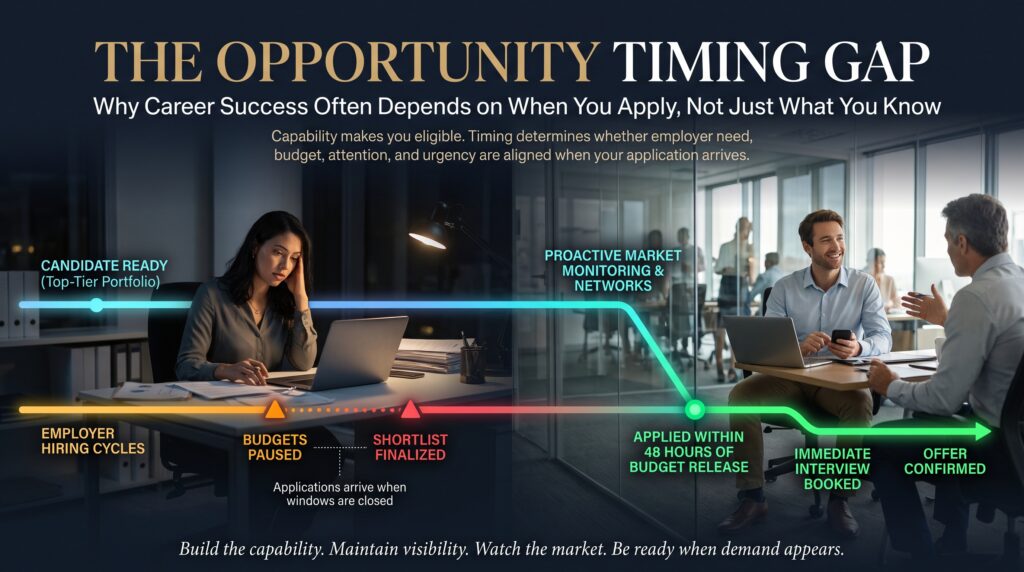
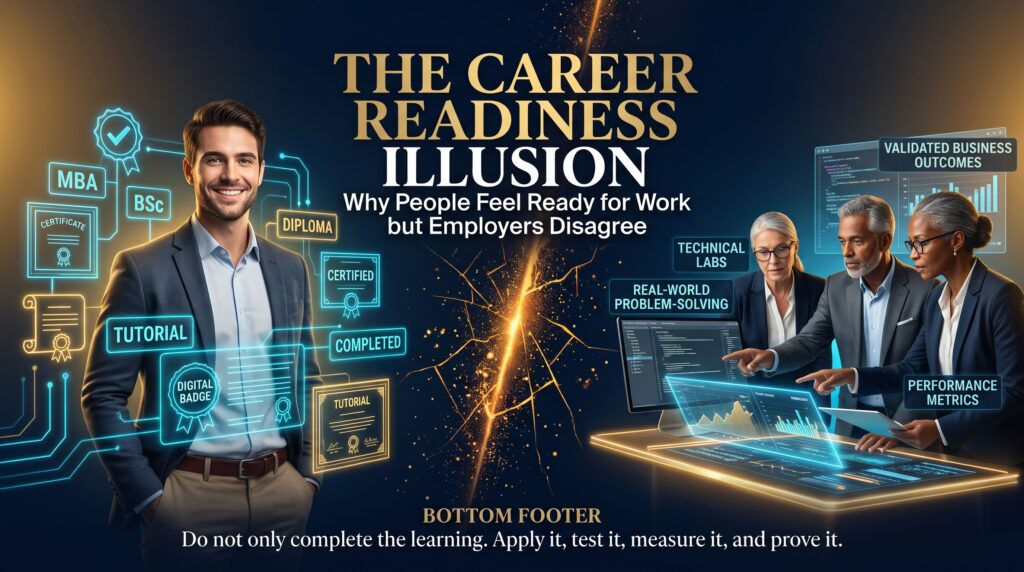
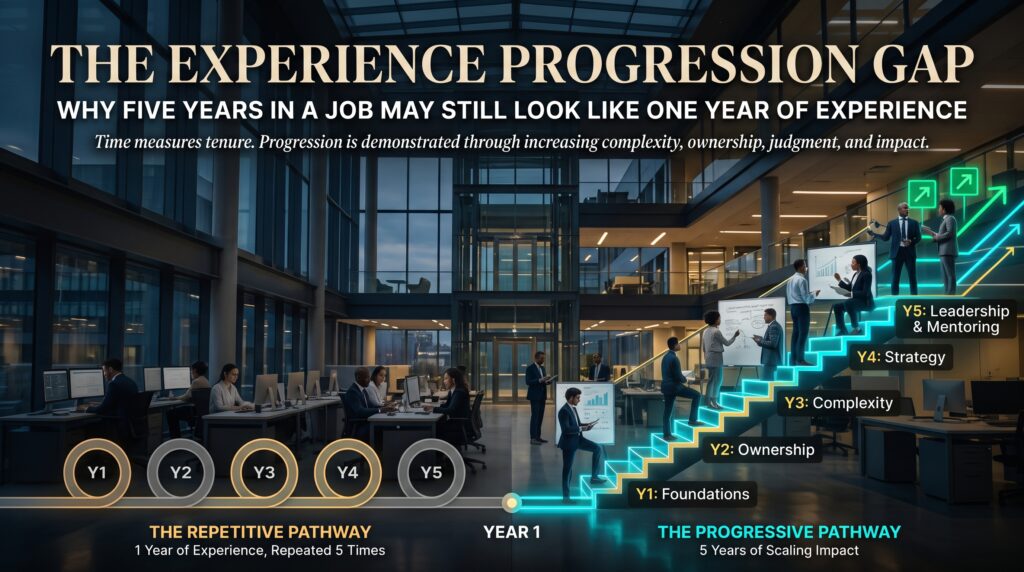
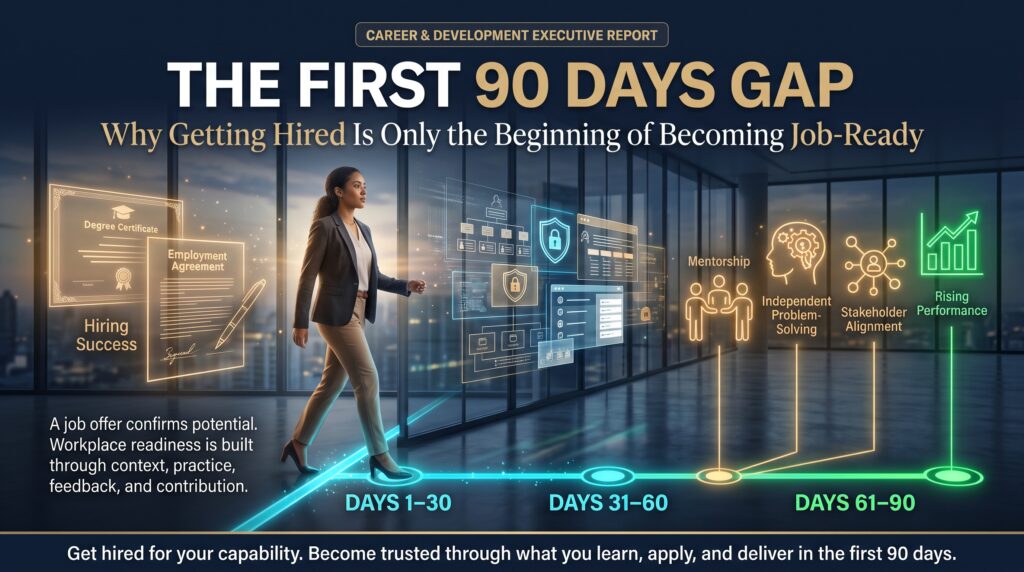
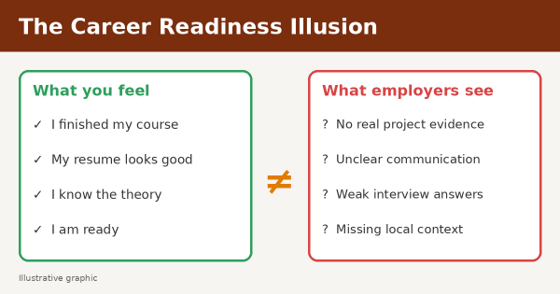
The career readiness illusion is the uncomfortable gap between feeling ready for work and being seen as ready by the people who do the hiring. You finish your course, polish your resume, send out applications and wait. The replies are silence or polite rejections, and the feedback never explains why.
If this sounds familiar, you are not alone, and it does not mean you are not capable. It usually means something is missing between what you know and what employers can see. Let us look at why the career readiness illusion happens, how to spot it, and how practical job ready programs can help you close the gap.
What Is the Career Readiness Illusion?
Career readiness is not just a qualification. It is the mix of technical skills, workplace behaviour, communication, local knowledge and proof of ability that makes an employer confident you can start contributing quickly.
The career readiness illusion appears when a person believes they have that mix, but employers cannot find evidence of it. The belief feels real, because study, certificates and effort are real. The problem is that employers judge readiness by what they can observe in your resume, interview and examples.
Why People Feel Ready but Employers Disagree
The gap is usually made of several small things rather than one big failure.
1. Qualifications are not the same as experience
A certificate shows you have learned something. Employers also want to know you have used it. Without projects, internships or real tasks to point to, even strong study can look theoretical.
2. Knowing something is different from doing it under pressure
Courses and tutorials usually give clear steps and tidy examples. Workplaces give vague requests, time limits and competing priorities. Many people feel ready until they face a real problem with no instructions.
3. Soft skills are under-practised
Communication, teamwork, time management and adaptability are often the deciding factors in hiring. They are also the hardest to assess on your own. This soft skills gap is a major part of the career readiness illusion.
4. Resumes describe duties, not results
Listing tasks like “responsible for customer support” says little. Employers respond to evidence: what you improved, fixed, built or delivered, and how you know it worked.
5. Interview skills are rusty or untested
Behavioural questions such as “tell me about a time you solved a difficult problem” require structured answers. Without practice, even good candidates ramble or undersell themselves. The STAR method (situation, task, action, result) is a simple way to organise your stories.
6. Local market knowledge is missing
Career changers and people new to Australia may be unfamiliar with local job titles, workplace culture, selection criteria and expectations. A strong candidate in one country can still struggle to present themselves in another.
7. Nobody gives honest feedback
Friends are kind, rejections are vague, and many employers never explain their decisions. Without honest feedback, it is easy to keep believing you are ready while the same weaknesses repeat.
The Real Cost of the Career Readiness Illusion
- Longer job searches. Applications go out without the evidence employers need, so interviews are rare.
- Wasted effort. People apply to dozens of roles using the same weak resume or interview approach.
- Lost confidence. Repeated rejection without explanation can make capable people doubt themselves.
- Stalled careers. Months pass without new experience, which makes the next application harder.
How to Close the Career Readiness Illusion
The good news is that every part of the gap can be improved with honest assessment and focused practice.
Step 1: Check yourself against real job ads
Collect ten to fifteen ads for your target role and list the skills, tools and experience they request. Compare them with your own. Resources such as Job Outlook and Jobs and Skills Australia describe occupations and typical tasks, which can help you reality-check your expectations.
Step 2: Build evidence, not just knowledge
Create projects, case studies or a portfolio that show your skills in action. For IT roles that might be a small cloud lab, a test plan, a data dashboard or a website. Describe the problem, your approach and the result.
Step 3: Get real work experience
Internships, volunteering, placements and short freelance tasks all count. Even small, genuine experience gives employers something solid to discuss.
Step 4: Rewrite your resume around results
Replace duties with outcomes. Use numbers only where you can honestly support them, and tailor each application to the language of the job. Do not forget the cover letter, which is your chance to link your skills to that specific employer.
Step 5: Practise interviews with feedback
Run mock interviews with a mentor, career counsellor or experienced colleague. Ask for specific feedback on clarity, structure and confidence, then repeat. Prepare three to five STAR stories you can adapt.
Step 6: Learn the local job market
Understand how Australian employers write selection criteria, what titles they use and how they assess culture fit. Platforms such as SEEK and government services like Workforce Australia show real listings and career resources, and the Australian Computer Society supports ICT professionals, including skills assessment for migrants.
Step 7: Ask for feedback and act on it
After an interview, politely ask what you could improve. Even one useful comment can reveal a pattern. Treat each application as a chance to learn.
Training That Turns Feeling Ready into Being Ready
A good job ready program does more than teach theory. It combines hands-on practice, certification-focused learning and career support, including resume and cover letter guidance and interview preparation, so you can show employers what you can do.
Explore our job ready programs or choose the pathway that matches your goals:
- IT job ready program: a starting point for beginners and career changers.
- Business analysis: for people who like solving problems and working with stakeholders.
- Cloud computing: for those heading towards modern infrastructure roles.
- Cyber security: for learners interested in protecting systems and data.
- Data analysis: for anyone who enjoys numbers and insights.
- Database: for those interested in managing and querying data.
- Project management: for coordinators ready to lead delivery.
- Software testing: for detail-minded people entering quality assurance.
- Web development: for creative problem solvers who want to build.
Study in your city or online across Australia:
- Job ready program in Melbourne
- Job ready program in Sydney
- Job ready program in Brisbane
- Job ready program in Perth
- Job ready program in Adelaide
- Job ready program in Canberra
See all locations, learn more about us, read the FAQs, or visit our career blog for more job search advice.
Frequently Asked Questions About the Career Readiness Illusion
What is the career readiness illusion?
It is when a person believes they are ready for work, but employers do not see enough evidence of skills, experience or workplace readiness.
Why do employers disagree with how ready I feel?
Employers judge from what they can see: your resume, examples, interview answers and proof of results. Skills that are not visible are easy to overlook.
How can I tell whether I am really job ready?
Compare yourself with real job ads, ask for honest feedback from mentors or recruiters, and test yourself in mock interviews and practical projects.
Do soft skills really matter in IT jobs?
Yes. Technical roles rely on clear communication, teamwork and problem solving. Employers often treat them as equal in importance to technical knowledge.
Can a job ready program help?
Yes. Programs that include hands-on practice, certifications, resume support and interview coaching help you build both the skills and the evidence employers want.
Final Thoughts: Replace the Illusion with Evidence
The career readiness illusion is not a personal failing. It is a visibility and practice gap, and both can be fixed. Check yourself against real roles, build proof of your skills, gain real experience, sharpen your resume and rehearse your interviews. When your evidence matches your confidence, employers start to agree with you.
Ready to get properly job ready? Call 1300 649 299 or contact our team to find the right job ready program in Melbourne, Sydney, Brisbane, Perth, Adelaide, Canberra or online.