

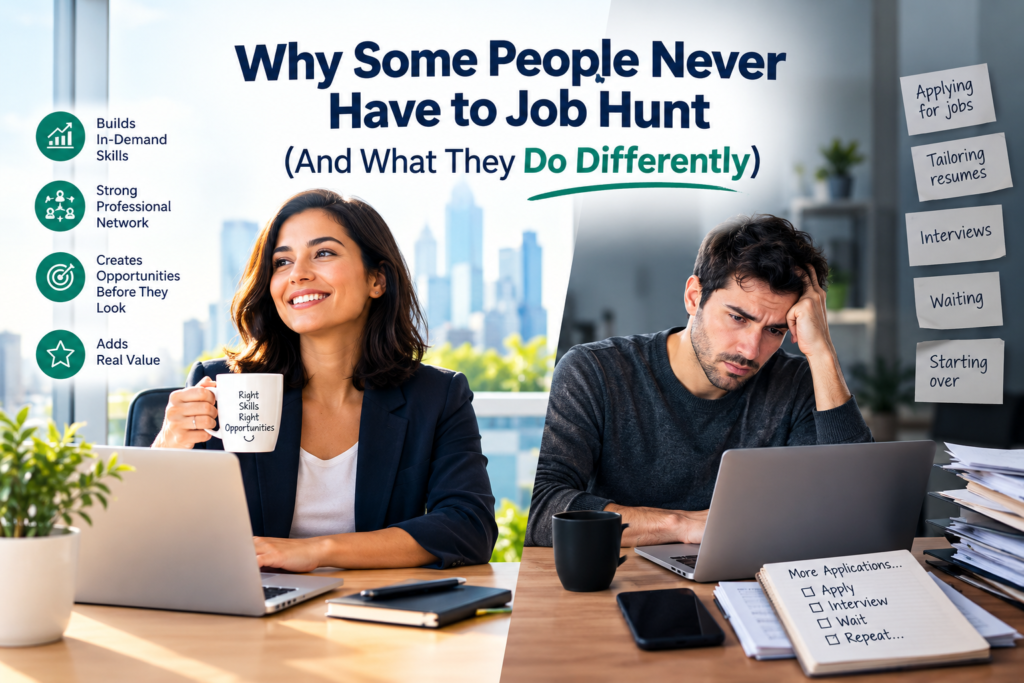
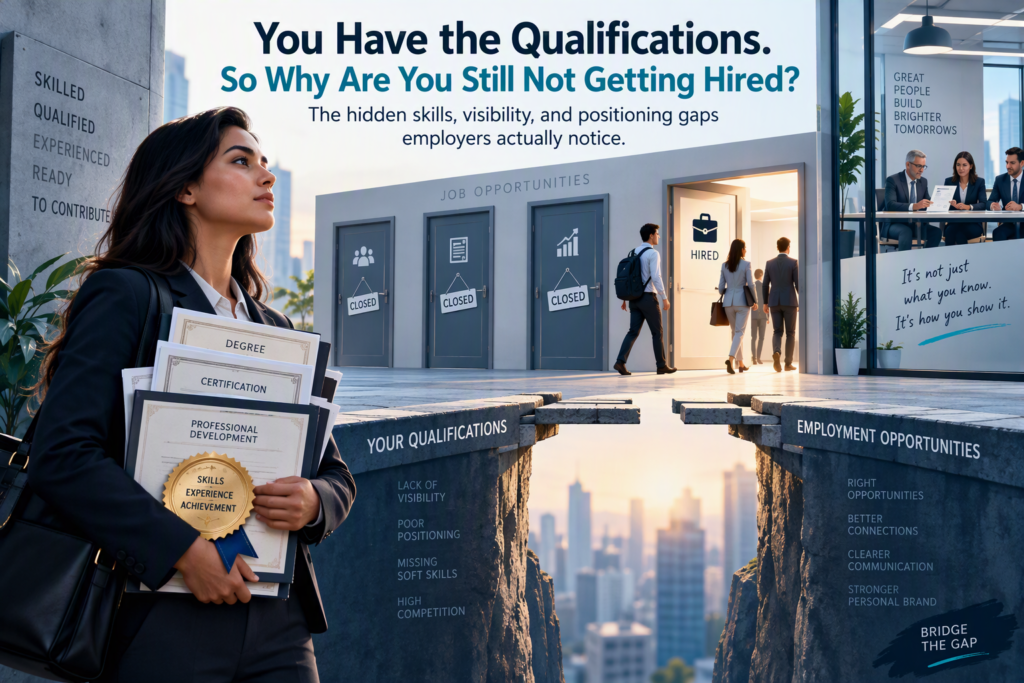
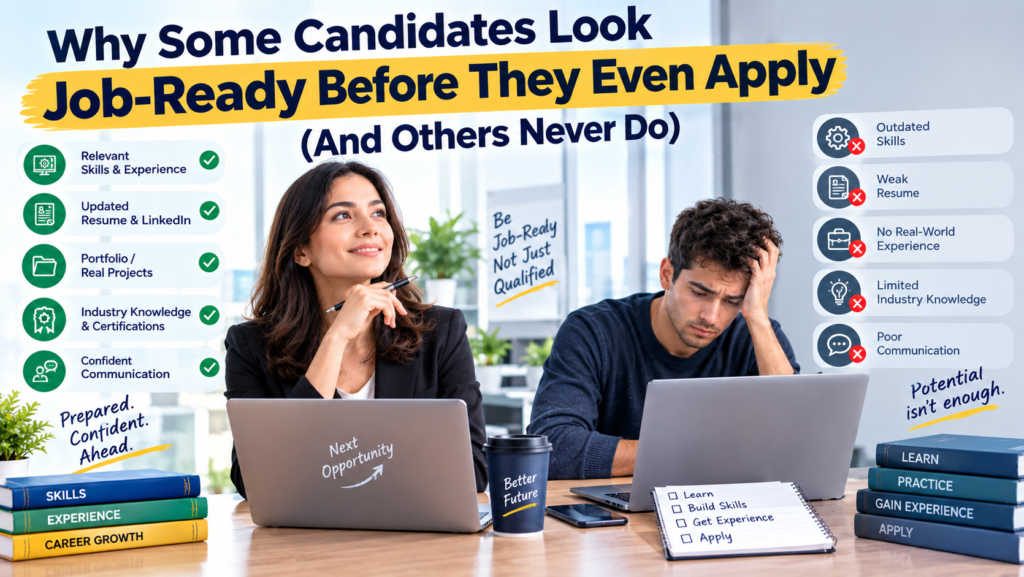
Not getting hired when you have the degree, the certificates and the drive is one of the most draining experiences in a job search. You send application after application, hear nothing back, and start to wonder what is wrong with you. The honest answer is usually that nothing is wrong with you. Something is wrong with how your qualifications are being read.
Employers do not hire qualifications. They hire evidence that a person can do the job, fit the team and start contributing quickly. This guide explains seven common reasons candidates end up not getting hired, and gives you a practical plan to fix each one, whether you are a graduate, a career changer or a migrant looking for your first role in Australia.
Qualified but Not Getting Hired? What Employers Actually See
Put yourself in the hiring manager’s seat. A role attracts dozens or hundreds of applicants. Someone spends a few minutes, sometimes less, scanning each résumé for proof that you match the advertisement. If they cannot find it quickly, you move to the “no” pile, however strong your degree is.
That is why so many capable people spend months not getting hired. The gap is rarely intelligence or effort. It is the distance between what you know and what an employer can see, trust and verify.
7 Reasons You Keep Not Getting Hired Despite Your Qualifications
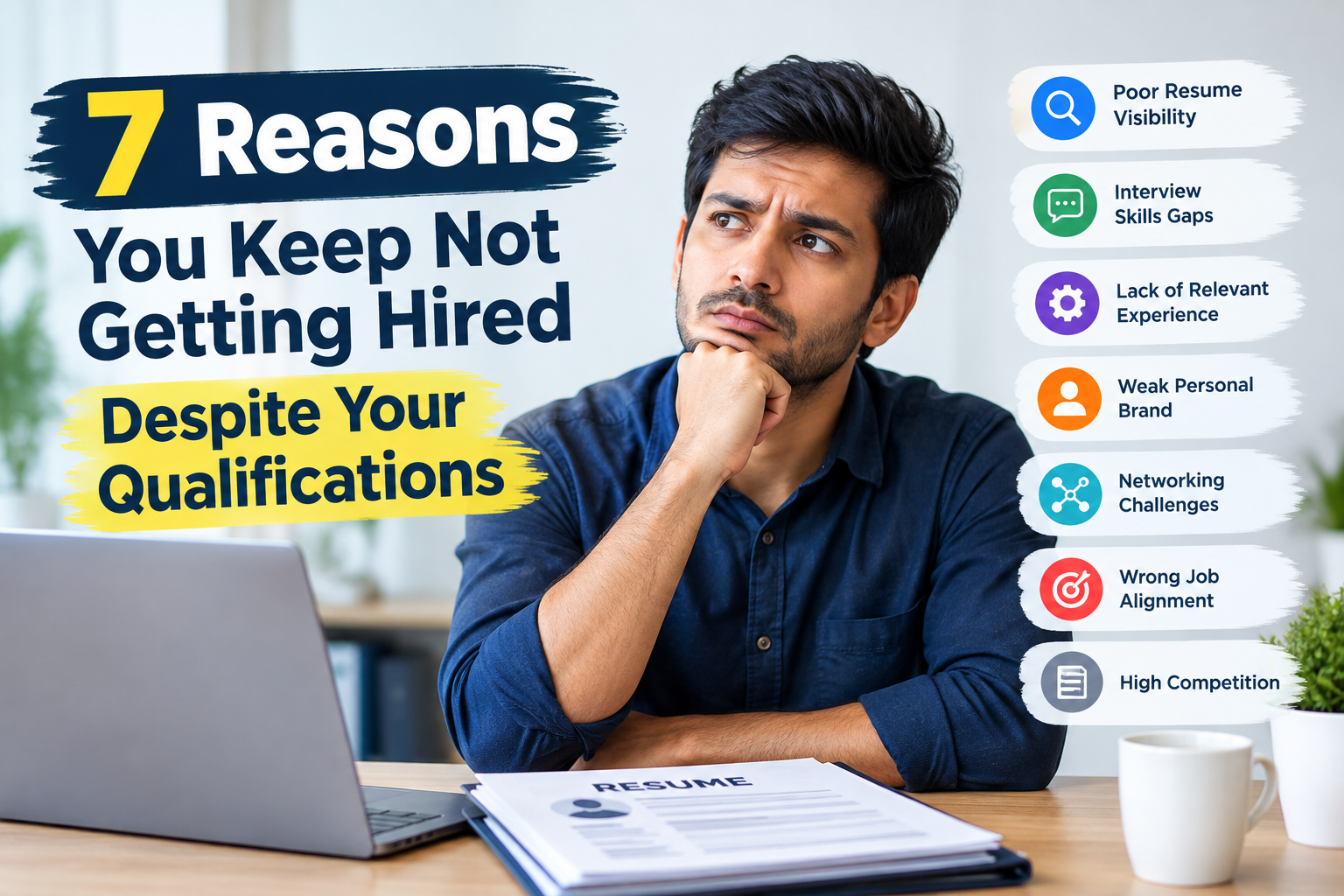
1. A qualification proves knowledge, not job readiness
Universities and colleges teach theory. Employers want to know whether you can use it on a Monday morning: configure the tool, write the report, handle the difficult stakeholder. If your résumé lists subjects but no practical projects, employers have little reason to believe you can perform. Hands-on, instructor-led training with real exercises helps close this gap.
2. You have no local work experience
For graduates and newly arrived migrants, this is the biggest hurdle. Many employers prefer someone who already understands Australian workplace culture, communication style and expectations. Without it, you can keep not getting hired even when your overseas experience is strong. A structured internship gives you relevant local experience to put on your résumé, and something concrete to talk about in interviews.
3. Your résumé and cover letter are generic
One résumé sent to fifty jobs rarely works. Recruiters and applicant tracking systems look for the language of the job ad: the tools, the certifications, the responsibilities. A cover letter that shows genuine interest in the company and ties your skills to the role can be the difference between an interview and silence. If you are not getting hired, tailoring every application is the fastest improvement you can make.
4. Your skills are out of date or not verified
Technology and business practice change quickly. A degree from several years ago may not show the current tools employers use. Industry certifications give a hiring manager confidence that your skills are current and independently verified. This matters most in fast-moving fields such as cyber security, cloud computing and data analysis.
5. Interviews are costing you the job
Some people are not getting hired because they are getting interviews and losing them. Behavioural questions (“tell me about a time when…”) catch many candidates off guard. Confidence is a skill, and it improves with practice, feedback and a clear structure for your answers. Mock interviews and coaching from career counsellors can transform the way you present yourself.
6. Your job search strategy is scattered
Applying to everything, or only to jobs that are far above your experience, wastes energy. So does relying only on online job boards. Many roles are filled through referrals and networking, so a quiet professional network can keep you not getting hired for longer than necessary. Workforce tools such as Workforce Australia can help you search, and industry bodies such as the Australian Computer Society offer networking and skills-assessment information for IT professionals. To see which occupations are in demand, check the labour market research from Jobs and Skills Australia.
7. The gap keeps growing
The longer you spend out of work or in an unrelated job, the harder it becomes to explain the gap. Recruiters worry about skills fading. The good news is that a gap can be turned into a story: “I used this time to complete training, earn certifications and complete a remote internship.” Every month of visible progress works in your favour.
How to Fix It When You Are Qualified but Not Getting Hired
You do not need to change everything at once. Work through the steps below over one month and you will look like a different candidate.
| Timeframe | What to do | Result |
| Week 1 | Read 10 target job ads. List the skills, tools and certifications that keep appearing. Compare them with your résumé. | A clear skills-gap list |
| Week 2 | Rewrite your résumé for one job family. Draft a flexible cover letter template you can tailor in ten minutes. | A résumé built for scanning |
| Week 3 | Start a certification-focused course or program to fill the biggest gap. Look for hands-on labs and an internship option. | Verified, current skills |
| Week 4 | Practise behavioural interview answers out loud. Message five people in your target industry and ask for advice, not a job. | Interview confidence and a growing network |
Small, consistent steps beat a burst of frantic applications. If you stay not getting hired after this, review the reasons above again and ask a career counsellor for an honest second opinion.
How a Job Ready Program Helps If You Are Not Getting Hired
A job ready program combines the three things employers look for into one pathway: skills, local experience and a strong job application. At Job Ready Programs Australia, the model is built around three parts:
- Instructor-led, hands-on training that gives you current skills and certifications employers can verify.
- Relevant Australian work experience through a remote internship, so you can keep your current job while you build your résumé.
- Career counselling covering your résumé, cover letter and interview preparation so you get noticed and perform on the day.
You can explore all job ready programs or read about the team behind the programs. Three popular pathways are:
- The Cyber Security Job Ready Program for graduates, career changers and new arrivals who want security roles.
- The Business Analysis Job Ready Program, designed for career changers, graduates and migrants who need a head start.
- The Data Analysis Job Ready Program, covering T-SQL, SQL Server business intelligence, Power BI and report building.
Programs run full-time on weekdays or part-time on weeknights and weekends, so you can study while you work. Classes are available in the classroom or live online across Melbourne, Sydney, Brisbane, Perth, Adelaide, Hobart and Canberra. Program details and inclusions differ, so check the specific program page before you enrol.
Not Getting Hired FAQs
Why am I not getting interviews even though I am qualified?
Usually your résumé is not showing a clear match to the job ad. Add the keywords, tools and certifications from the advertisement, and lead with results and practical projects rather than a list of subjects.
Do I need Australian work experience to get hired?
It is not a legal requirement, but many employers prefer it because it reduces their risk. A relevant internship or local project work is a practical way to show you understand the environment.
How long does it take to get hired after training?
No one can promise a timeline, because it depends on your field, experience and how actively you search. Training plus a tailored résumé, interview practice and networking gives you the best chance of shortening it.
I am a migrant with overseas experience. Why am I still not getting hired?
Employers may not recognise overseas job titles or employers. Translate your experience into local terms, add current certifications and gain some Australian experience so recruiters can see the link to the role.
Are certifications really worth it?
In technical fields, yes, because they verify your skills to someone who has only minutes to assess you. Pair them with practical projects for the strongest effect.
How do I explain a gap in my résumé?
Be honest and brief, then show what you have done since: training, certifications, volunteering or an internship. Employers respond well to visible momentum.
Final Thoughts: Stop Not Getting Hired and Start Getting Noticed
Being qualified is the starting line, not the finish. Employers want proof of practical skills, local experience, a tailored application and a confident interview. Fix those four things and the silence starts to break.
Ready to take the next step? Explore our job ready programs or call 1300 649 299 to discuss the right pathway for your career goals.