
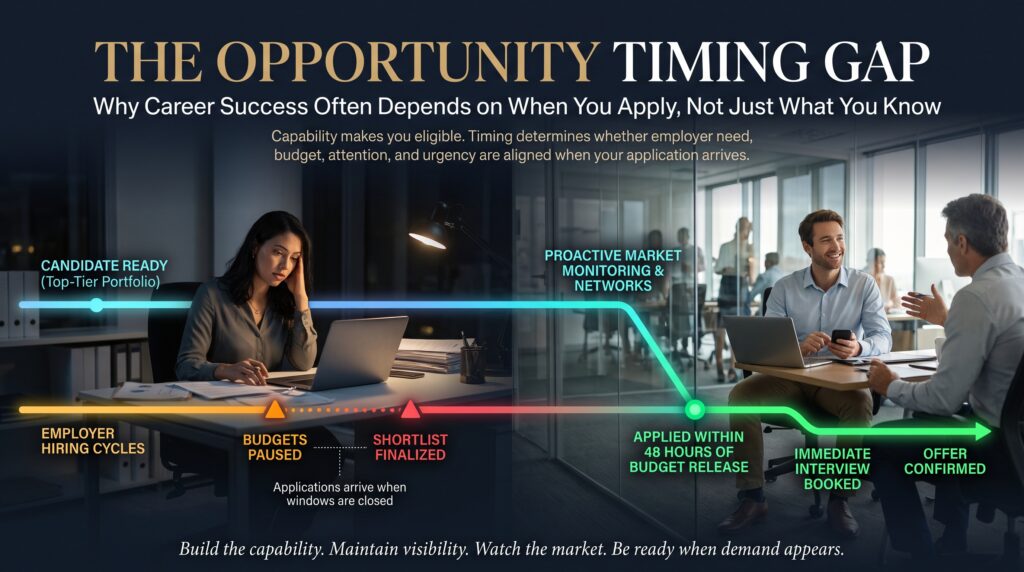

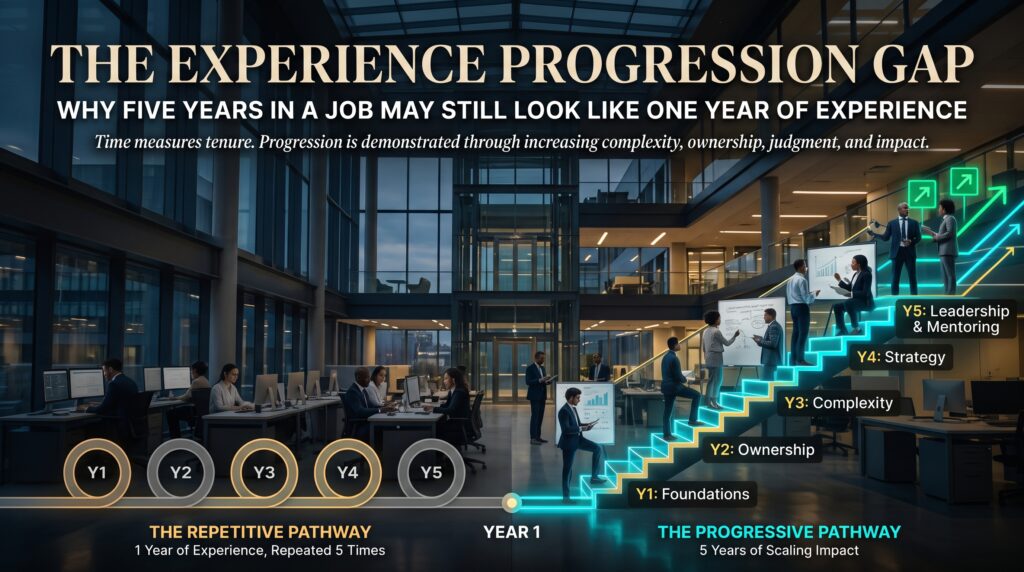
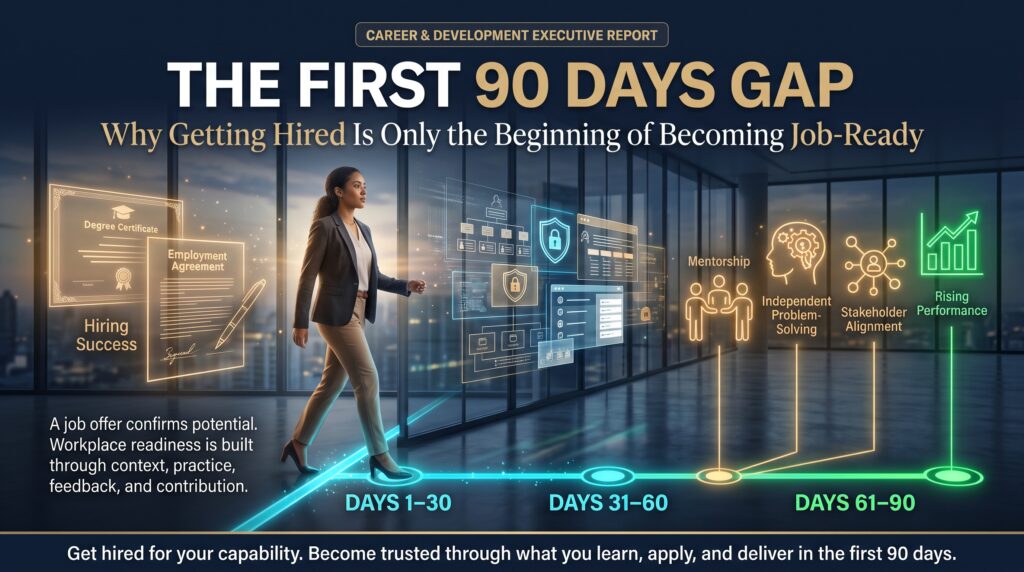

A career adjacency map is a simple way to see which jobs sit right next to the one you have now, and how small the gap often is. Most people look at job ads and see a wall of requirements. A career adjacency map shows something kinder: you already hold a large share of the skills those roles ask for, and a few well-chosen additions can move you across.
This guide explains how a career adjacency map works, gives real examples of adjacent roles in the Australian job market, and walks you through building your own. If you are a graduate, a career changer or new to Australia, it should help you stop asking “Am I qualified?” and start asking “How close am I?” You will also find pointers to practical training from Job Ready Programs for the gaps worth closing.
What Is a Career Adjacency Map?
Think of your skills as a set of overlapping circles. Your current job sits in one of them. Next to it are other roles that use many of the same skills, with only a few differences. Those neighbouring roles are what we call adjacent careers, and laying them out visually is the career adjacency map.
The idea matters because most hiring is not about a perfect match. Employers hire people who can learn the remaining 20 or 30 per cent quickly. If you can see which roles need only a small step, you can plan a realistic move instead of a risky leap.
Why You Are Probably Closer to a New Job Than You Think
People undersell themselves in three common ways. First, they describe their work by job title instead of by the skills they use daily. Second, they treat unfamiliar tools as a barrier when tools can be learned in weeks. Third, they compare themselves with the most experienced person in a role rather than the minimum an employer needs for an entry or mid-level hire.
A career adjacency map fixes all three. It forces you to list real skills such as communicating with stakeholders, solving problems under pressure, handling data, documenting processes and managing deadlines. These show up across many jobs, and they are exactly what recruiters mean by transferable skills.
Career Adjacency Map Examples: Where Your Skills Can Take You
The table below shows a few common starting points and the roles that often sit nearby. It is a guide, not a guarantee. Entry requirements vary between employers and cities, so always check current job ads for the exact wording.
| Starting point | Adjacent roles | Skill layer to add | Explore |
| Customer service / call centre | IT service desk analyst, support analyst | IT support tools, ticketing, networking basics | IT Job Ready |
| Admin / reporting in Excel | Data analyst, reporting analyst | SQL, data visualisation, BI tools | Data Analysis |
| Teacher / trainer | Business analyst, training coordinator | Requirements gathering, process modelling | Business Analysis |
| Retail / hospitality manager | Project coordinator, delivery lead | PM frameworks, scheduling, risk management | Project Management |
| Quality checker / operations | Software tester, QA analyst | Test cases, test tools, defect tracking | Software Testing |
| Help desk / network support | Cloud support engineer, cyber analyst | Cloud platforms, security fundamentals | Cloud Computing / Cyber Security |
| Designer / content creator | Web developer, front-end developer | HTML, CSS, JavaScript | Web Development |
Notice the pattern. In every row, the person already has the people skills and workplace judgement. What they lack is a specific technical layer, and that layer is trainable.
How to Build Your Own Career Adjacency Map in 7 Steps


1. List your skills, not your job titles
Write down everything you do in a typical week. Include tools, tasks and soft skills. Aim for 20 to 30 items. Ask a colleague what they think you are good at; they often spot strengths you overlook.
2. Collect ten real job ads
Search SEEK or LinkedIn for roles that interest you in your city and save ten adverts. Choose roles you suspect you are close to, not only dream jobs.
3. Highlight the repeated requirements
Mark every skill, tool or certification that appears in at least three adverts. These are the real market signals. One-off requirements can usually be ignored.
4. Score your overlap
For each role, count how many repeated requirements you already meet. Roles where you match around half or more are strong adjacent options. Roles below that are stretch goals for later.
5. Identify the one or two gaps that matter
Look for gaps that appear in every target role. Those are your priorities. Perhaps it is SQL, a cloud certification, a testing tool or a project management framework. Ignore the rest for now.
6. Close the gap with proof
A short course, a recognised certification or a hands-on project gives employers evidence. Structured, instructor-led training with certification preparation tends to be faster than learning alone because someone has already organised the path.
7. Reframe your resume around the new direction
Rewrite your summary and top achievements using the language of the target role. A customer service team leader who resolved 40 tickets a day becomes someone with incident handling and escalation experience. Same facts, clearer story.
Using a Career Adjacency Map in the Australian Job Market
Local context changes the picture. Government resources such as Jobs and Skills Australia and Workforce Australia publish information on occupations and labour market trends, and SEEK Career Advice offers practical guides on switching fields. Check these alongside live job ads to see which adjacent roles are actually hiring near you.
If you are new to Australia, a career adjacency map is especially useful. Overseas experience often counts for more than you expect, but it needs translating into local job titles and local certifications. Pairing your existing background with Australian-recognised training can shorten that translation a lot.
Adjacent Careers by City: Sydney, Melbourne, Brisbane, Perth, Adelaide and Canberra
Demand for adjacent roles differs across the country. Sydney and Melbourne have deep pools of finance, consulting and technology employers, so business analysis, data and cloud roles are common. Brisbane and the Gold Coast continue to grow, with strong interest in service desk, testing and project roles. Canberra leans towards government, security and project delivery. Perth and Adelaide mix resources, defence and services, which creates steady openings for data, cyber security and project coordination.
You can study close to home or online. Explore our course options for Sydney, Melbourne, Brisbane, Perth, Adelaide and Canberra, or see every Job Ready Programs location. Logitrain also has city guides for IT courses in Sydney, Melbourne and Brisbane.
Which Course Fits Your Career Adjacency Map?
Once your map shows the gap, matching it to training is simple. If you want a broad entry into technology, start with the IT Job Ready program. If your map points towards analysis, look at business analysis or data analysis. For infrastructure and security paths, see cloud computing and cyber security. Quality-focused people often thrive in software testing, while organised communicators may prefer project management. Others head towards web development or database work.
You can compare every pathway on the Job Ready Programs courses page or read more about us and how our training works. For details on structured programs with certification, career counselling and local work experience support, see the Logitrain IT job programs page, and visit our FAQs for common questions.
Common Mistakes When Using a Career Adjacency Map
- Aiming too far away. Choose roles one step from where you are, then plan the next step later.
- Ignoring soft skills. Communication, problem solving and stakeholder management carry real weight with employers.
- Collecting certificates with no direction. Pick training that closes a gap shown in actual job ads.
- Skipping conversations. Talk to two or three people already in the target role before committing time and money.
- Waiting for perfect confidence. Most people feel under-qualified at the start of a move. Progress usually builds confidence, not the other way round.
Frequently Asked Questions About the Career Adjacency Map
What is a career adjacency map?
It is a visual or written overview of roles that sit close to your current one because they share skills. It helps you identify realistic next moves and the small gaps to close.
How do I find jobs I am qualified for without experience?
List your transferable skills, compare them against repeated requirements in real job ads, and focus on roles where you already meet around half of them. Then fill the gaps with training or projects.
Can I change careers into IT without a degree?
Many entry-level technology roles value practical skills and recognised certifications alongside, or sometimes instead of, a degree. Requirements vary by employer, so check current adverts and speak with a course adviser.
Which IT job is easiest to move into?
It depends on your background. People from customer service often start in service desk, those with analytical backgrounds look at data or business analysis, and detail-minded people consider software testing.
How long does it take to move into an adjacent career?
There is no fixed timeline. Some people prepare in a few months through focused study and job applications, while others take longer because of work and family commitments. A clear plan helps either way.
Final Thoughts: Draw Your Map, Then Take the First Step
A career adjacency map will not do the work for you, but it removes the guesswork. You see the roles that are closest, the skills that matter and the smallest sensible step forward. That clarity is often the difference between staying stuck and finally moving.
If you would like help turning your map into a plan, contact our team or call 1300 649 299. A career counsellor can talk through your background and suggest a practical pathway