
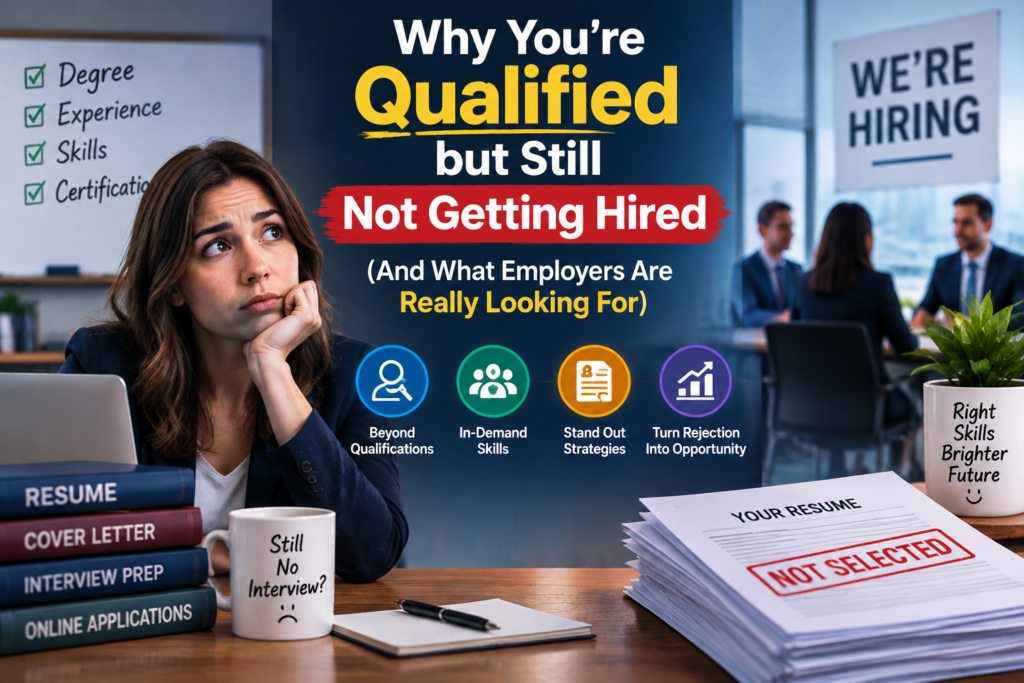
You’ve got the certifications. You’ve got relevant experience. You tick every box on the job description. And yet you’re still not getting hired, application after application, sometimes without even a rejection email to explain why. If this sounds familiar, the problem usually isn’t your qualifications. It’s what happens to your application before a human ever reads it, and what employers are actually screening for once they do.
This guide breaks down the real, research-backed reasons qualified candidates get passed over, and exactly what to change so your next application doesn’t disappear into the same silence.
You’re Not Imagining It: Qualified Candidates Really Do Get Screened Out
A widely cited study from Harvard Business School and Accenture, Hidden Workers: Untapped Talent, found that a large majority of employers admit their own screening processes reject qualified, high-skilled candidates simply because their resume doesn’t exactly match every listed criterion, even when the candidate could clearly do the job.
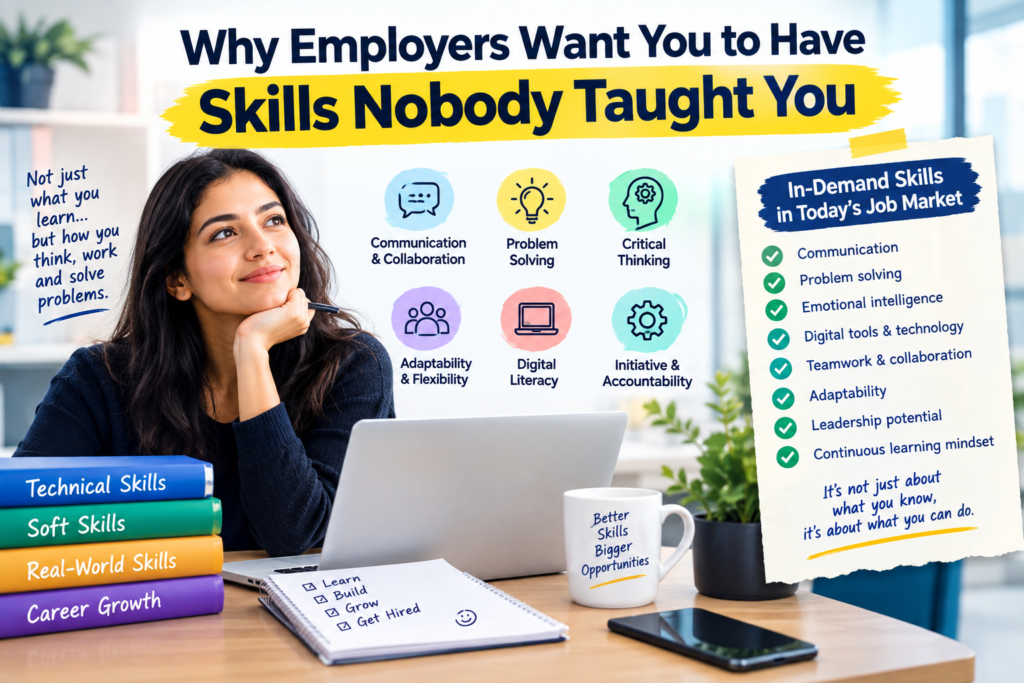
Separately, research from TestGorilla’s State of Skills-Based Hiring report found that most employers now favour candidates who can demonstrate applied skills over those who simply list qualifications, which means a strong resume alone is no longer enough to get you through the door.
Put together, this explains why so many capable people are not getting hired despite being objectively qualified: the process filtering them out was never designed to reward qualifications alone.
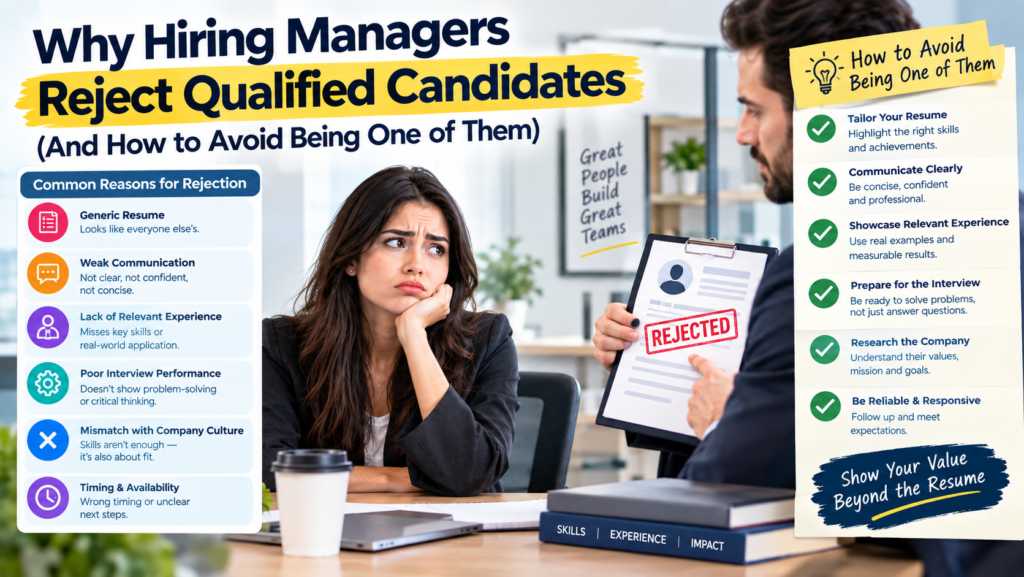
The Real Reasons You’re Not Getting Hired
- Your resume is written for a human, but it’s being filtered by software first, and missing exact keyword matches can knock you out before anyone reads it.
- You’re listing responsibilities instead of outcomes, so nothing on the page proves you can actually deliver results.
- Your interview answers describe knowledge rather than demonstrating it through specific, concrete examples.
- You’re applying broadly instead of tailoring each application to the specific skills the employer is testing for.
- Your certifications are current, but you can’t yet show recent, hands-on application of them.
What Employers Are Really Looking For
Once you get past the initial screen, hiring decisions come down to a smaller, more specific set of signals than most job seekers expect. Here’s what actually moves the needle.
1. Proof, Not Just Claims
Employers want evidence: a project you completed, a problem you solved, a measurable result you contributed to. A qualification tells them what you studied. A concrete example tells them what you can do.
2. Keyword and Skill Alignment With the Job Ad
Applicant tracking systems and recruiters both scan for specific terms from the job description. If your resume doesn’t mirror the language of the ad, even a highly qualified application can be filtered out before a person sees it.
3. Confidence Under Direct Questioning
Interviews increasingly include scenario-based questions designed to test how you think, not just what you know. Candidates who’ve practised answering these directly and specifically stand out immediately.
4. Communication and Cultural Fit
Technical qualification gets you shortlisted. How clearly you communicate, and how well you seem to fit the team, is very often the deciding factor between two similarly qualified candidates.
5. Recent, Relevant Activity
A certification from several years ago, with no recent project or update, can read as stale. Employers want to see that your skills are current, not just historically earned.
How to Fix It: Becoming the Candidate Employers Actually Hire
The good news is that every one of these gaps is fixable, and usually faster than people expect. This is exactly what a structured, career-focused training program is built to address: not just adding another certificate, but closing the gap between being qualified and being hireable.
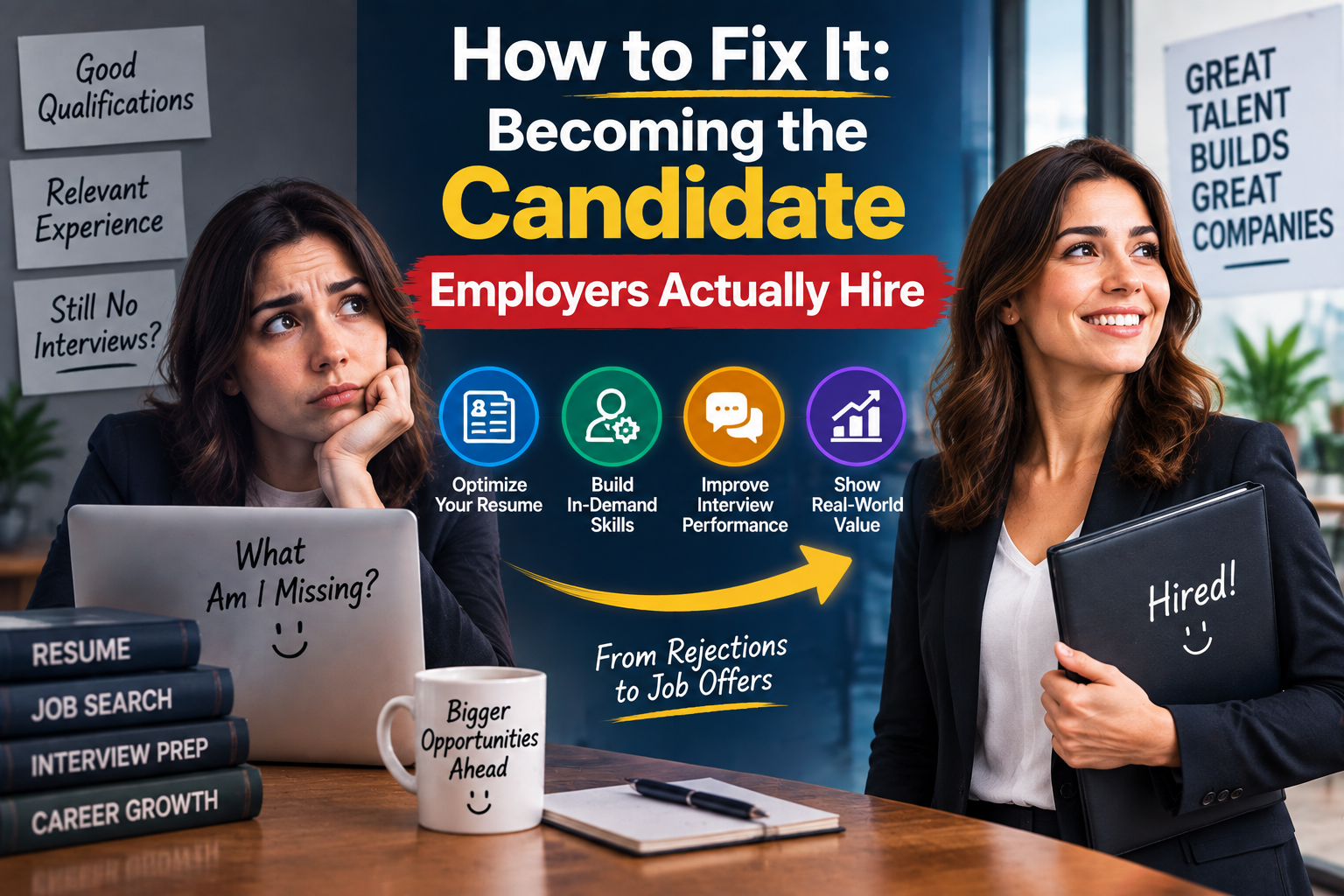
Job Ready Programs combine practical, hands-on IT training with recognised certifications, resume and cover letter support, interview preparation, and career counselling, so you leave with proof of capability, not just paper qualifications.
Depending on the career direction you’re aiming for, there are several practical pathways worth exploring:
- IT Job Ready for a broad, practical entry point into the IT sector
- Cyber Security for candidates targeting security analyst and related roles
- Cloud Computing for careers built around modern cloud infrastructure
- Data Analysis for roles centred on data-driven decision-making
- Business Analysis for candidates bridging business needs and technical delivery
- Project Management for structured delivery and leadership career pathways
- Software Testing for a hands-on entry into quality assurance
- Web Development for practical, project-based coding skills
- Database for candidates focused on data infrastructure and administration
Job Ready Programs Across Australia
Because employer expectations and in-demand skills shift by city and industry, training close to your target job market gives you an edge. Job Ready Programs are delivered across major Australian cities, with flexible full-time, part-time, and live online options.
- Melbourne, supporting candidates entering Victoria’s technology and finance sectors
- Sydney, with strong demand across IT, business analysis, and corporate roles
- Brisbane, where infrastructure and technology hiring continues to grow
- Perth, supporting resources, engineering, and IT-adjacent career changers
- Adelaide, with growing demand across defence, manufacturing, and technology
- Canberra, where government employers value verified, job-ready skills
Quick Fixes You Can Make This Week
- Rewrite your resume around outcomes: numbers, results, and specific contributions, not just duties.
- Mirror the exact keywords and skills listed in each job ad before you submit.
- Prepare two or three detailed, specific examples you can adapt to almost any interview question.
- Add a short, tailored cover letter that explains why you specifically fit this role.
- Pair any certification with a recent project or portfolio piece that proves you can apply it.
Frequently Asked Questions
Why am I not getting hired even though I’m qualified?
Most often it comes down to resume screening filters, missing keyword matches, or an inability to demonstrate practical application of your qualifications, rather than a lack of genuine capability.
How can I prove I’m job-ready without more work experience?
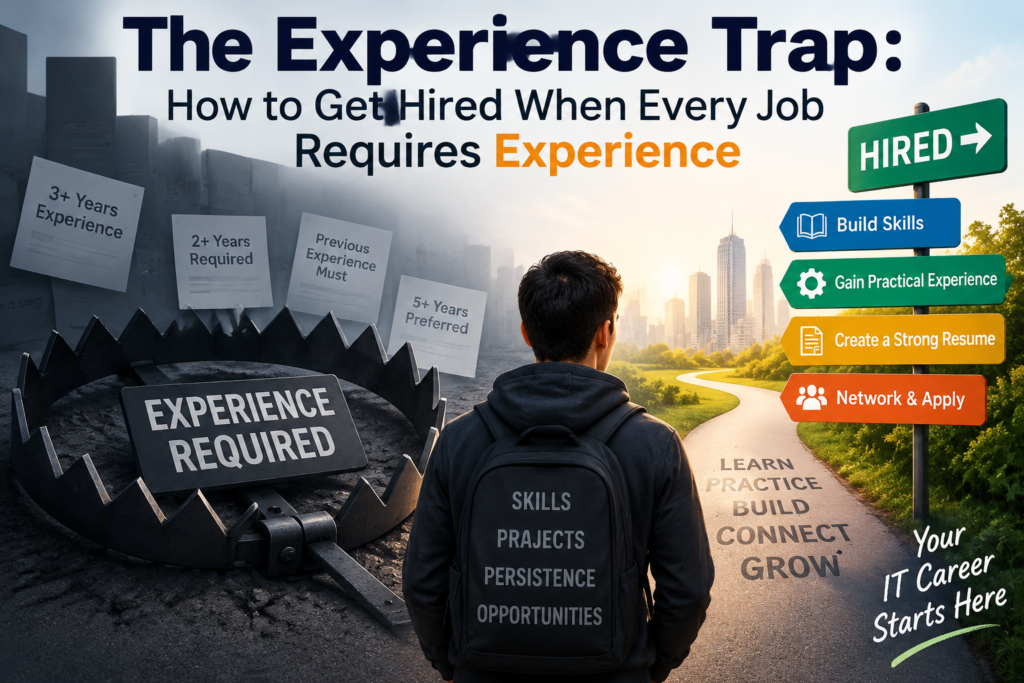
A hands-on portfolio, a completed project, or a certification backed by practical labs can demonstrate capability just as effectively as years of experience, particularly under skills-based hiring practices.
Do employers really use software to filter out qualified candidates?
Yes. Research shows the large majority of employers use applicant tracking systems, and many report that qualified candidates are screened out simply for not exactly matching listed criteria.
Ready to Stop Getting Filtered Out?
If you’re ready to close the gap between being qualified and being hired, explore the programs or get in touch with the team to find the right pathway for your goals and city.