

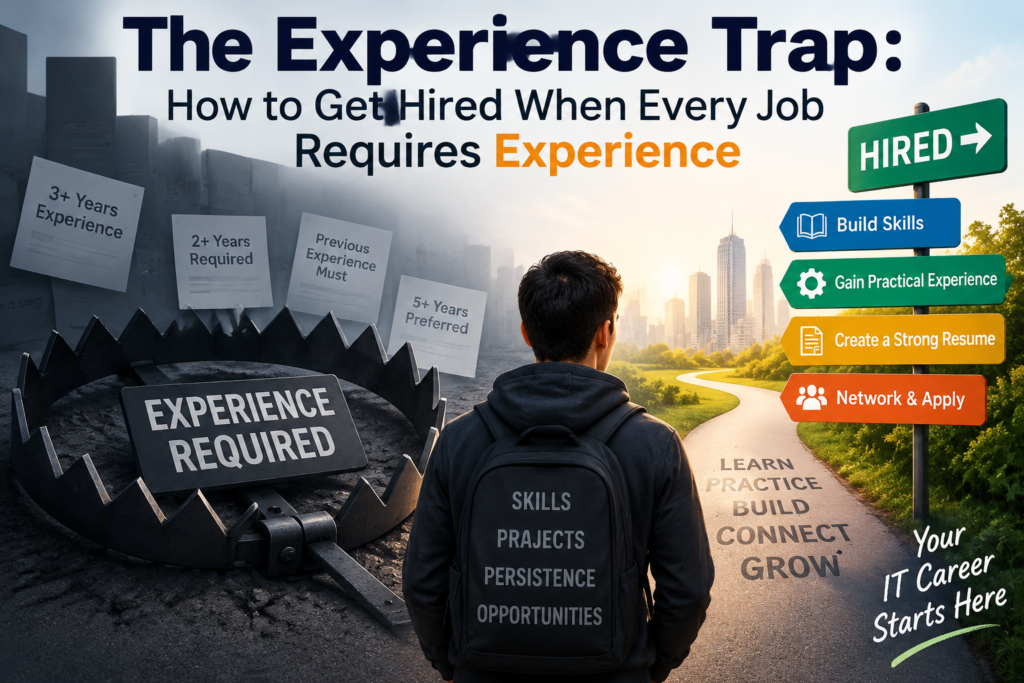

If you’ve spent weeks wondering how to get hired when every job requires experience, you’ve run into what career advisors across Sydney, Melbourne, Brisbane, Perth, Adelaide and Canberra call the experience trap entry-level job ads that quietly demand one to two years of experience nobody without a first job can possibly have. It feels like a closed loop, but it isn’t. Thousands of Australians break into a new field every year without ticking every box on the job ad, and they do it using a specific, repeatable set of tactics. This guide walks through exactly what works.
Why “Entry-Level” Job Ads Ask for Experience in the First Place
Most “entry-level, 1–2 years experience required” listings aren’t lying about the ideal candidate they’re describing a wishlist, not a hard requirement, because writing a job ad is often outsourced to a template or copied from a previous, more senior posting. Recruiters privately admit that a strong application from someone with 80% of the listed criteria, backed by real evidence of capability, regularly beats a mediocre application from someone who technically meets 100% of them. Understanding this changes how you should approach applying, not just how you should feel about it.
Tactics That Actually Get Experience-Trapped Candidates Hired
1. Build Proof of Skill Instead of Waiting for a Job to Provide It
Why this works:
A certification plus one real, documented project a portfolio piece, a small build, a case study gives you something concrete to point to that functions exactly like experience in an interview, even without a job title to prove it. Employers care about demonstrated capability far more than they care about how you acquired it.
2. Reframe Transferable Experience From Other Roles
Why this works:
Customer service, retail, hospitality, admin and trade roles all contain skills problem-solving under pressure, documentation, stakeholder communication, process compliance that map directly onto most entry-level professional roles. Candidates who explicitly translate this experience on their resume get shortlisted far more often than those who leave the connection for the recruiter to guess.
3. Target Roles Genuinely Built for Beginners
Why this works:
Trainee, Associate, Graduate, Support, and Junior-titled roles are usually written for people without direct experience, unlike a generic “Analyst” or “Coordinator” title that may attract candidates with years behind them. Brisbane and Perth employers in particular run structured traineeship and graduate programs specifically designed around this gap.
4. Apply Directly Instead of Relying Only on Job Boards
Why this works:
A large share of entry-level hiring happens through direct outreach, referrals and speculative applications rather than a formal job ad, especially at small and mid-size businesses across Adelaide and Canberra. A short, specific email to a hiring manager can bypass the ATS filters that automatically screen out resumes lacking exact keyword matches.
5. Use a Short-Term Program to Manufacture Real Experience
Why this works:
Internships, structured job-ready programs, freelance micro-projects and volunteer work all produce genuine, resume-worthy experience in weeks rather than years. Employers across Sydney and Melbourne consistently treat this kind of proactive experience-building as a strong positive signal, not a red flag.
6. Talk to the Gap Directly in Your Cover Letter
Why this works:
Ignoring an experience gap makes it feel bigger to the reader; addressing it head-on with a one-line explanation of what you’ve done to close it (a certification, a project, a course) reframes it as a solved problem rather than an open question mark.
The Experience Trap: What Changes When You Apply These Tactics
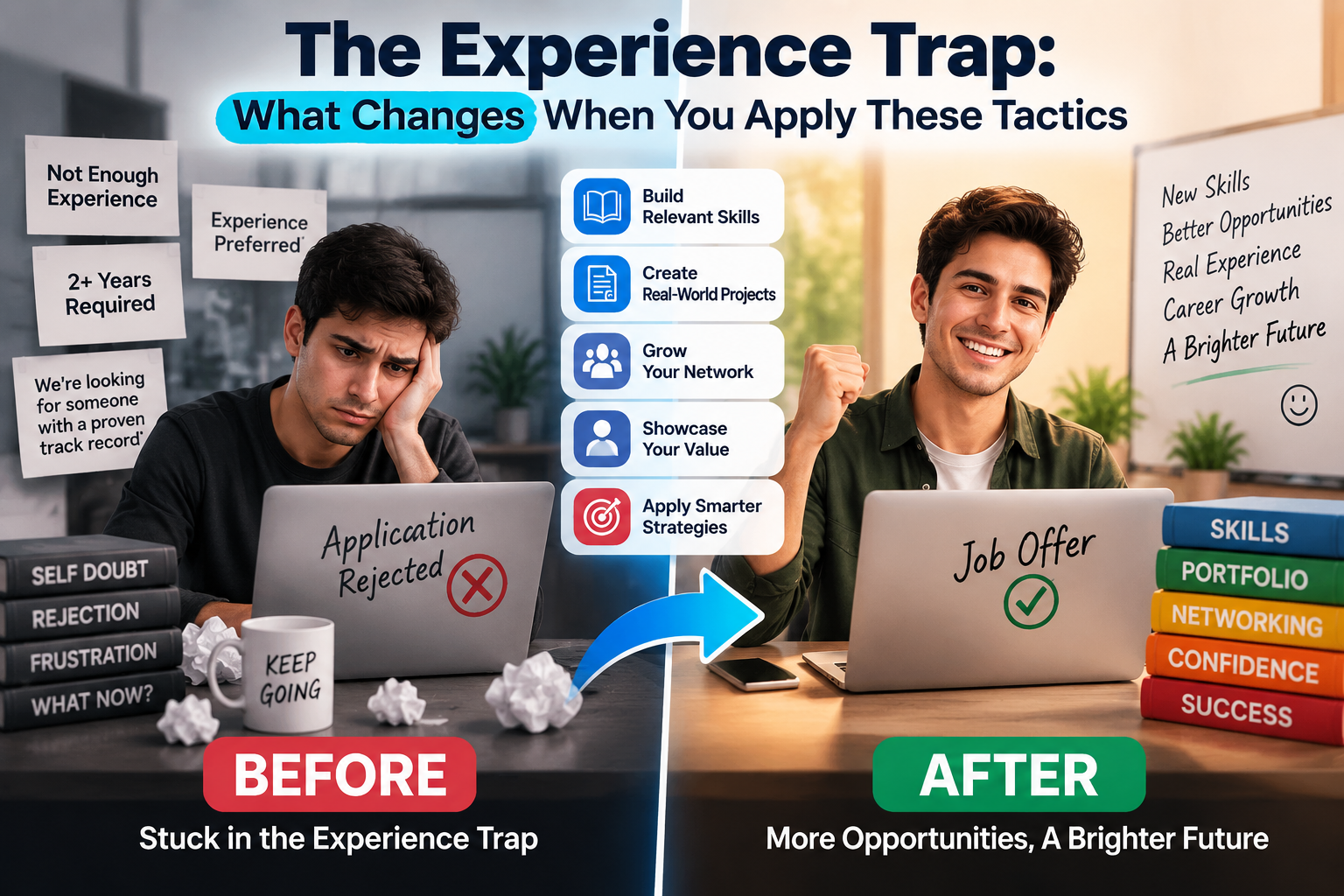
| Approach | Typical Outcome |
| Applying with resume alone, no project or certification | Filtered out by ATS keyword matching or ignored |
| Applying with a certification and one documented project | Shortlisted for interviews at a meaningfully higher rate |
| Applying only to senior-sounding titles | Consistently rejected for lacking years of experience |
| Applying to Trainee/Graduate/Junior roles with transferable skills framed clearly | Regularly shortlisted, even without direct industry experience |
A Simple 30-Day Action Plan
- Week 1: Pick one target role and list the skills it actually requires, not just the job title.
- Week 2: Start a certification or short course that closes your biggest gap for that role.
- Week 3: Build one small, documented project you can discuss in an interview.
- Week 4: Rewrite your resume around transferable skills and start applying directly, not just through job boards.
Programs and Certifications That Help Close the Experience Gap
A structured job-ready program compresses this entire process certification, project, resume rewrite into a guided, faster timeline than trying to piece it together alone.
- Explore a full Job Ready Program built specifically to help career changers and graduates close the experience gap.
- Build data skills with a Data Analytics Course and a portfolio-ready project.
- Build cyber security skills with a Cyber Security Course.
- Build business analysis skills with a Business Analyst Course.
- Explore the full IT and professional skills catalogue at Logitrain, Australia’s long-established training provider.
Further Reading
- Current entry-level and graduate job vacancies across Australia on SEEK.
- Australian Government traineeship and skills program information from Jobs and Skills Australia.
Final Tips Before You Keep Applying
- Stop applying to every listed requirement as a hard rule most are a wishlist, not a filter.
- Lead your application with proof of skill, not an apology for lacking experience.
- Apply directly and use your network alongside job boards, not instead of them.
Ready to stop losing to the experience trap? Explore the full Job Ready Program at jobreadyprograms.au and build the certification, project and resume that get career changers and graduates hired across Sydney, Melbourne, Brisbane, Perth, Adelaide and Canberra.